



Adventure gaming in the 2010s was dominated by Telltale Games. They released numerous episodic adventure games known for their cel-shaded animated style and conversational choices that would affect both how the characters would perceive you and the direction of the story. One of those games was The Wolf Among Us, a noir detective story with an unusual protagonist and setting.
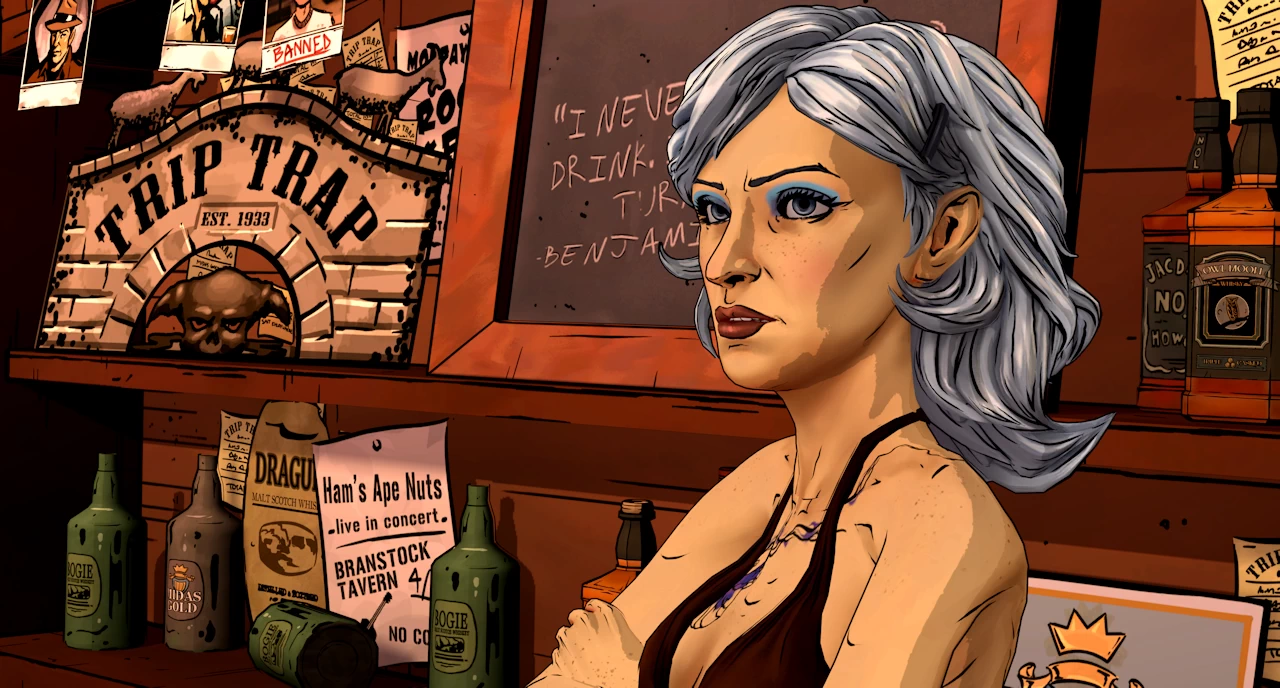
The Wolf Among Us is being given the remaster treatment this year ahead of the release of its long-awaited sequel, The Wolf Among Us 2. At this year’s San Diego Comic-Con, The Hard Rock Hotel’s 207 Bar was turned into the Trip Trap Bar, one of the locations in the game. Demo stations were available that let attendees get their hands on the game and play through over thirty minutes of the game’s opening.
The game is based on the Fables graphic novels by Bill Willingham and is set in Fabletown. Fabletown is a secret enclave in New York City where the exiled characters from fairy tales live in hiding, protected by glamour which prevents mortals from seeing them in their true forms. The Wolf Among Us stars Bigby Wolf, the sheriff of Fabletown who you might know better as the Big Bad Wolf. Fabletown may be inhabited by fairy tale characters, but it is not a land of happily ever after. Fables, as the residents of Fabletown are known, must not run afoul of the law and continue to pay hefty fees for the glamour that hides them. If for any reason they can not keep hidden or get themselves into trouble they will be sent to the Farm, another secret place in upstate New York. While the Farm is not necessarily an unpleasant place, the Fables view it as a prison and will do anything they can to avoid being sent there.
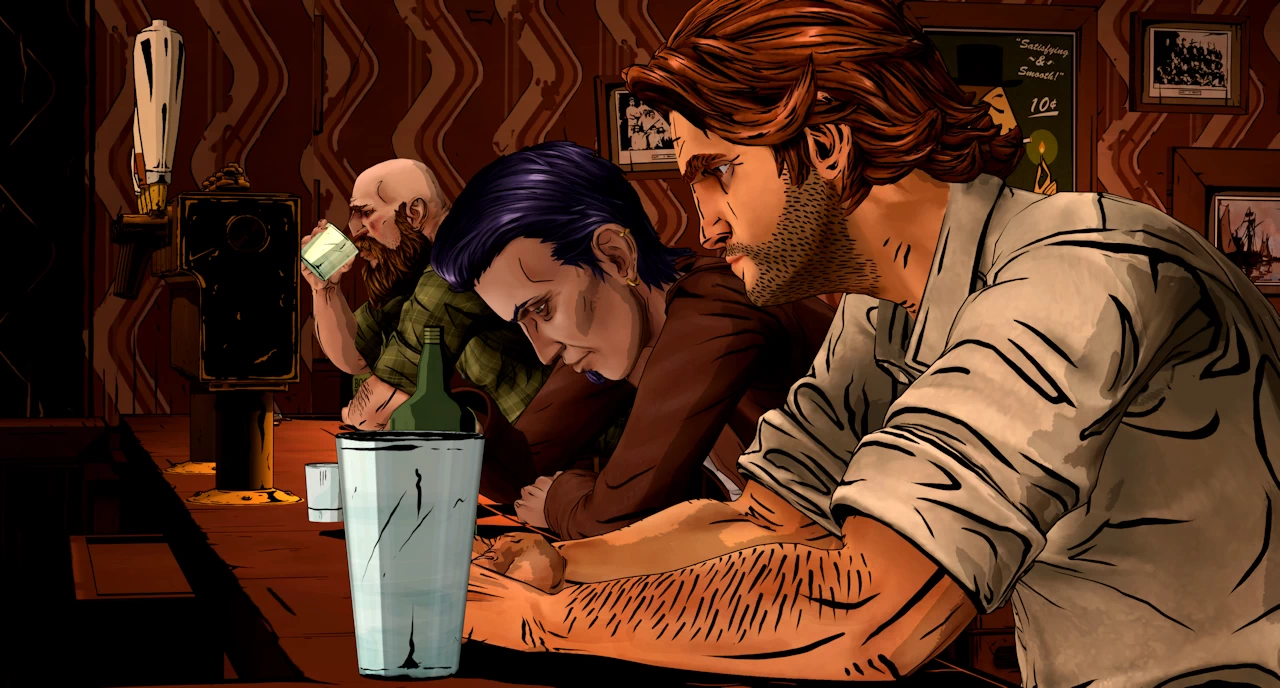
The game opens with Bigby responding to a domestic disturbance in a low-rent tenement in Fabletown. This opening scene incorporates most of the game’s play mechanics. When it’s time to respond to a character during a conversation, you can choose from three responses or remain silent. Your response could alter the flow of the conversation, or even the flow of the story. You’ll know you’ve made a significant remark because the game will note that the character you’re speaking to will remember what you said.
The next gameplay mechanic is exploration. In classic adventure game style, you’ll navigate from scene to scene and each will have a number of interactive objects. Move the cursor over these and you’ll see a compass wheel of potential interactions.
Lastly, there are quicktime events. In the demo these showed up during a fight sequence and were used to land punches and dodge attacks.
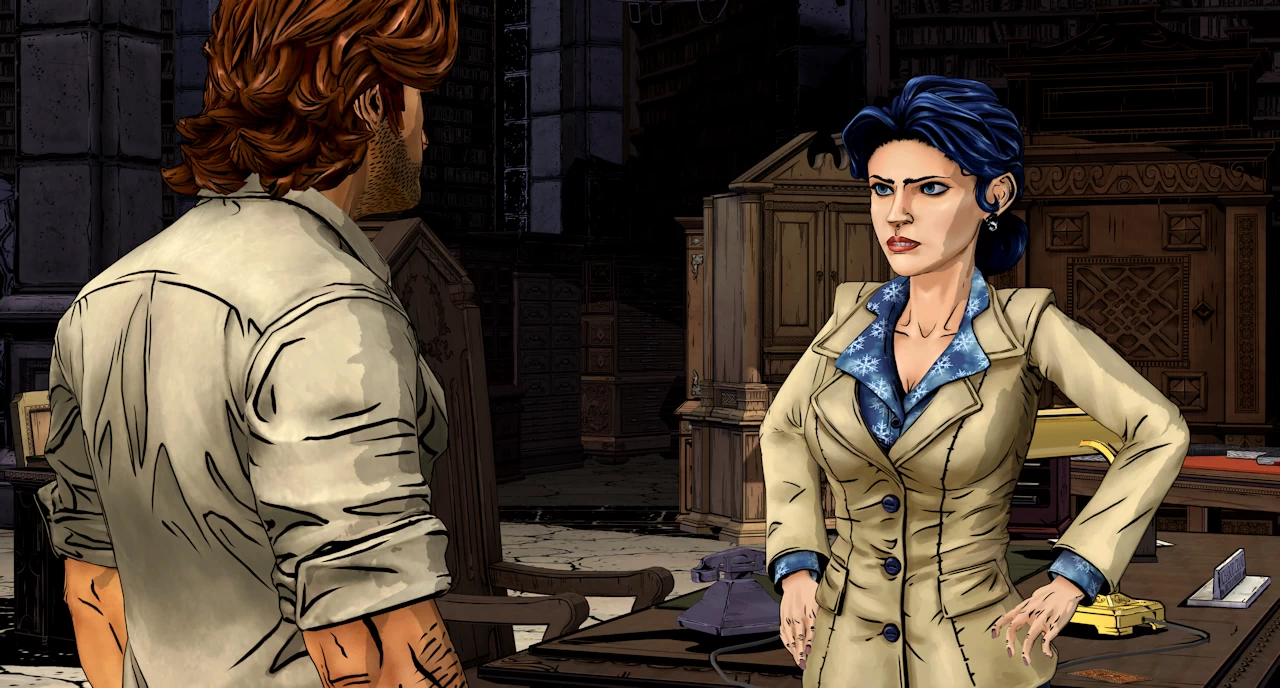
If you play the game, you’ll quickly realize that you’re definitely not in fairyland here. That domestic disturbance I noted before quickly turns very violent, and one of those involved is murdered in a grisly fashion soon after. Bigby is facing a tough case to crack, and the implications of the murder may extend beyond the streets surrounding Fabletown.
Playing the demo, it was clear that the game has been remastered as it did not at all look like a 13-year-old game. The color and details really help to bring the cel-shaded graphics to life, and the animations were really smooth thanks to the increased framerate. I played and enjoyed the original when it was first released, and am looking forward to visiting Fabletown again.