The Dragons Lair
Digital Dragons is one of Europe’s largest gaming conferences – think GDC but more expansive since it’s for more of the game industry than just devs. It takes place each May in the ICE Krakow Congress Centre in the heart of Krakow, Poland, which is right across the Vistula River from Wawel Castle, the home of the legendary dragon Smok Wawelski (and now you know where the conference gets its name). For three days, developers, publishers, industry execs, and press convene to attend conference seminars, network, play indie games, and, of course, go to a party or two. I was one of the over 2,000 attendees at this year’s conference, ensuring that the US was one of the 53 countries from which this year’s visitors call home.
Day One
Well, my day one, which was day two of the conference. The official first day of the conference featured the Legal Summit and the Game Design Summit. While of great interest I’m sure to legal, business, and engineer types, my focus was more on what you and I as gamers would find of more interest.
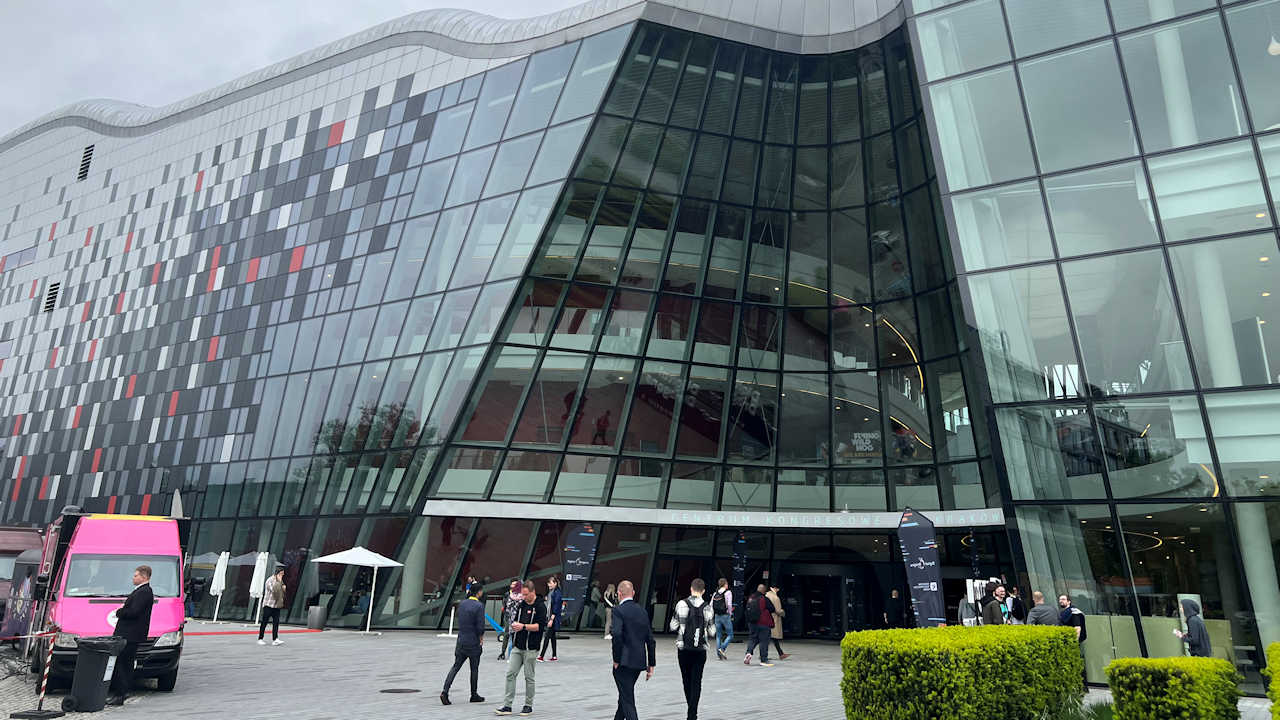
ICE Krakow Congress Centre
Before diving into things, I’d be remiss not to mention what a great venue the ICE Krakow Congress Centre is. Convention centers tend to be dark, cavernous spaces, but the ICE Krakow Congress Centre is largely an open, welcoming space with windows that run from the ground through top floors. Not only do these windows provide for a great view of Wawel Castle, they fill the center with natural light, which I truly appreciated since spending all day under artificial lights tends to drain my energy faster- especially when dealing with a nine-hour time difference from home.
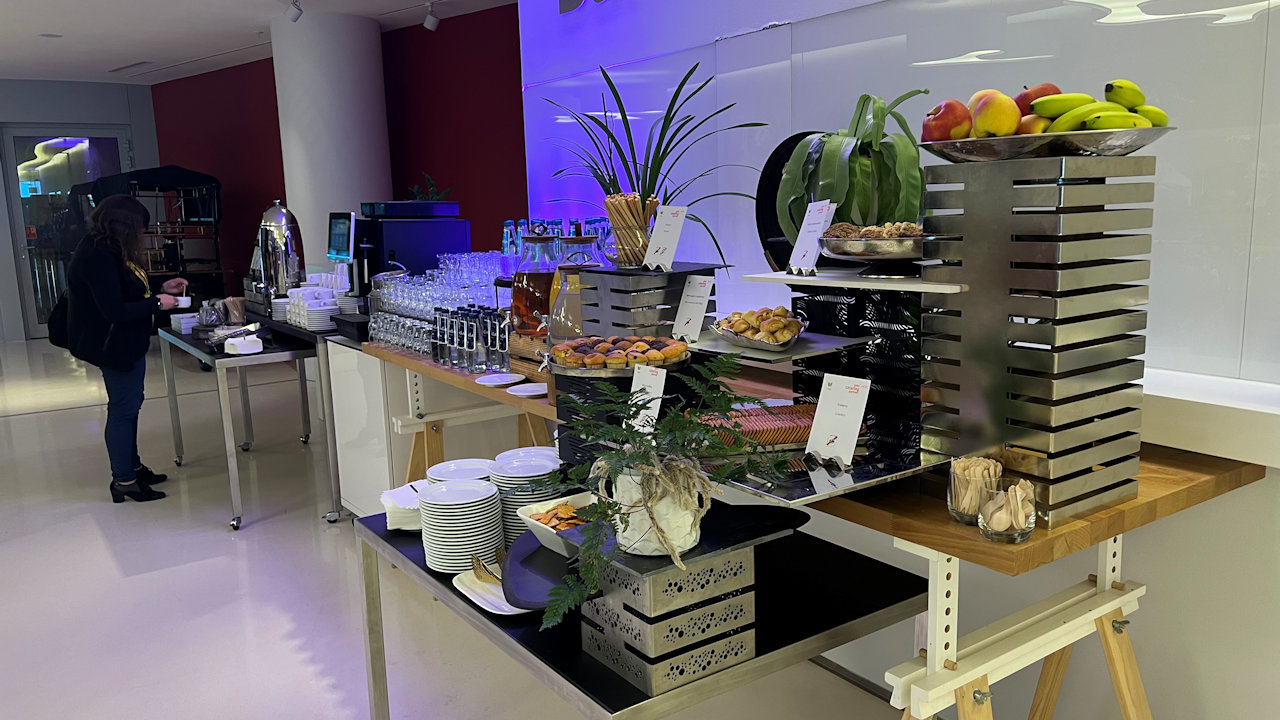
Another really nice thing about the center is that it provides multiple refreshment stations on each floor. You have your choice of juice, water, tea, or an espresso drink, as well as snacks such as the best oatmeal cookies I’ve ever had (which is saying a lot since I generally prefer my oatmeal as a breakfast food and not as a cookie). And … it’s … all … free! It’s so nice to attend a conference at which you don’t have to decide if you can spare a half hour or more to spend in line for the privilege of buying an $8 coffee. And since I’m talking food at the moment, I will mention that lunch was provided by a large number of food trucks parked right outside the center’s front door that not only stayed open during most of the conference each day, but also gave me a free lunch with a scan of my conference badge.
The Programs
One of the things that impressed me about Digital Dragons is the number of programs available to attendees. Not only are there a half dozen or so available to attend at any given timeslot, the topics are pretty diverse and you can usually find something appealing to attend no matter what your background in games may be (say, for example, games journalism). And luckily for someone like me who only knows a handful of Polish words and a smattering of high school German, the programs are all conducted in English. The conference makes it easy to see what’s on offer and to build your own schedule via a really handy app that’s available to all attendees.
Gamer Psych 101
First up for me was Bridging Motivational Psychology and Game Design. Yeah, it’s a weighty and somewhat academic sounding title, but the seminar was anything but a stuffy college course. It covered a lot about what makes a game appealing to players, and how successful games tap into players’ psychological and motivational needs, and provide a relief from the pressures of life that help bring them back into equilibrium. Where things really started to get interesting is when they identified the four main drivers of why people play games:
- For the opportunity for co-operation and to form social bonds
- For feelings of achievement, mastery, and dominance
- To become immersed in a different world and face and solve new problems
- To accumulate things, i.e. for the sweet, sweet loot
Now not every one of those categories appeals to all players, so there really isn’t such a thing as a universally loved game. However, by further breaking down those four categories into 16 core motivational drivers, a game can be designed to appeal to a particular type of gamer. There wasn’t time to go through each sub category, so the presenters focused on dark fantasy games. Dark fantasy gamers are appealing to completionists who want to rely on their own resilience, so minimal, if any, guidance should be provided and tutorials should be avoided completely. Mechanics should focus on exploration, stealth, and challenging battles. It was also interesting to learn that dark fantasy fans from different countries gravitate towards different elements of these games. In the US and UK, gamers seek reflection from a compelling narrative, German gamers gravitate toward the feeling of supremacy dark fantasy provides, and for South Koreans the experience is an emotional catharsis. Dark fantasy isn’t really my go-to genre, so I’ll leave it to those of you who are into it to confirm if that reflects the appeal of the genre to you.
Medieval Music in a Modern Game
Narrative through Music in Kingdom Come: Deliverance II was presented by Jan Valta, Lead Composer for Warhorse Studios. Any music majors would have certainly been able to geek-out at this presentation, but Valta did a good job of showing what work went into composing the soundtrack for Kingdom Come: Deliverance II (let’s just go with KCD2 moving forward) for those who couldn’t quite understand the challenges presented by the meter changes, parallel open fifths, and lack of thirds in Medieval music (like someone who played trumpet in high school so that he could play something really loud at sports games and not get in trouble for it, just as an example I just made up right now). The first thing that I found interesting is that a composer doesn’t just sit down and start writing music for a game; a lot of work goes into determining how they want the music to enhance the gameplay first. For KCD2 the goal was to be as cinematic as possible, drawing on the work of John Williams for inspiration and how he uses strong themes to comment on the story and draw out the viewers’ emotions. Another aspect of cinema music is, surprisingly, silence. The music should only be there when needed, is at its strongest when it starts playing and at its second strongest when it stops, and the longer a musical piece, the longer that silence that should follow it.
Valta then demonstrated how the type of music playing and the instruments used should reflect the environment. For gameplay within a monastery the music should be vocal and its flow completely driven by the lyrics (remember those meter changes I mentioned?). Monks weren’t recruited for their singing prowess, so the range must be limited and the pace slow enough that it can be handled by those who are not professional operatic singers. Any instruments used need to be very basic, with nothing as complex as stringed instruments. Outside the monastery the music remains monastic, but there needs to be an element of mystery since peasants can only imagine what it is like on the other side of the wall. Since the peasants would have access to additional instruments, these would be added to the music as well.
For the cities, each district was given its own unique style of orchestration. Rich areas are filled with the posh and snobby, and they would seek out more complex, modern music with a large number of highly skilled musicians demonstrating their craft on highly technical music. On the other hand, the poor districts feature music played by one, occasionally two instruments. The music would be traditional and simple, kind of like the peasants themselves. For the foreign ghetto, Valta looked to Medieval Jewish music for inspiration, and added a drum line, more complex melodies, and a Middle Eastern influence. When the music from each of these areas was played while scenes from the game were shown, you could really appreciate the work that went into giving each area a unique feel entirely driven by the music. The next time you play KCD2, pay close attention to how the music is influencing your feel for the game, and give a silent nod to Valta for the work he put into it for you.
The Anatomy of a Quest
Wooden Alien’s Hubert Kubit gave a talk on quest design titled Quest Anatomy: Character, Challenge, Change. Kubit focused on what makes a quest engaging enough to entice the player to take it on, which any of you who like me has passed on side quests in games that seemed like more work than fun would hope that game designers all learn. The three most important pillars of quest design are the Three Cs, character, challenge, and change. The character must have a past that connects them to the overall story. The challenge represents the present – how do you sell the quest to the player in exchange for their time to complete it? And the change represents the future and how completing the quest will advance the story or enhance the player’s character.
A good quest begins with the character seeking your help. Some developers try to use things like personality tests or RPG character sheets to develop NPCs, but Kubit stressed a simpler approach that focuses on two base requirements for a memorable character – the character must be conflicted and the player must care enough about the character to want to help them. The challenge needs to be sold with a hook, and additional hooks must be present at each stage of the quest. The hook is how you sell the quest to the player and must be either narrative, gameplay, or character based. It’s basically the headline at the start of an article, click-bait for the quester, so to speak. The change should make the quest worthwhile and reward the work put into it. Is the story advanced or enhanced? Does the player gain access to new skills or gear?
The next time you are playing a game and mulling over whether or not to accept a side quest, give a little thought into how well the developer implemented the Three Cs and how they are factoring into your decision.
Indies, Indies, and more Indies
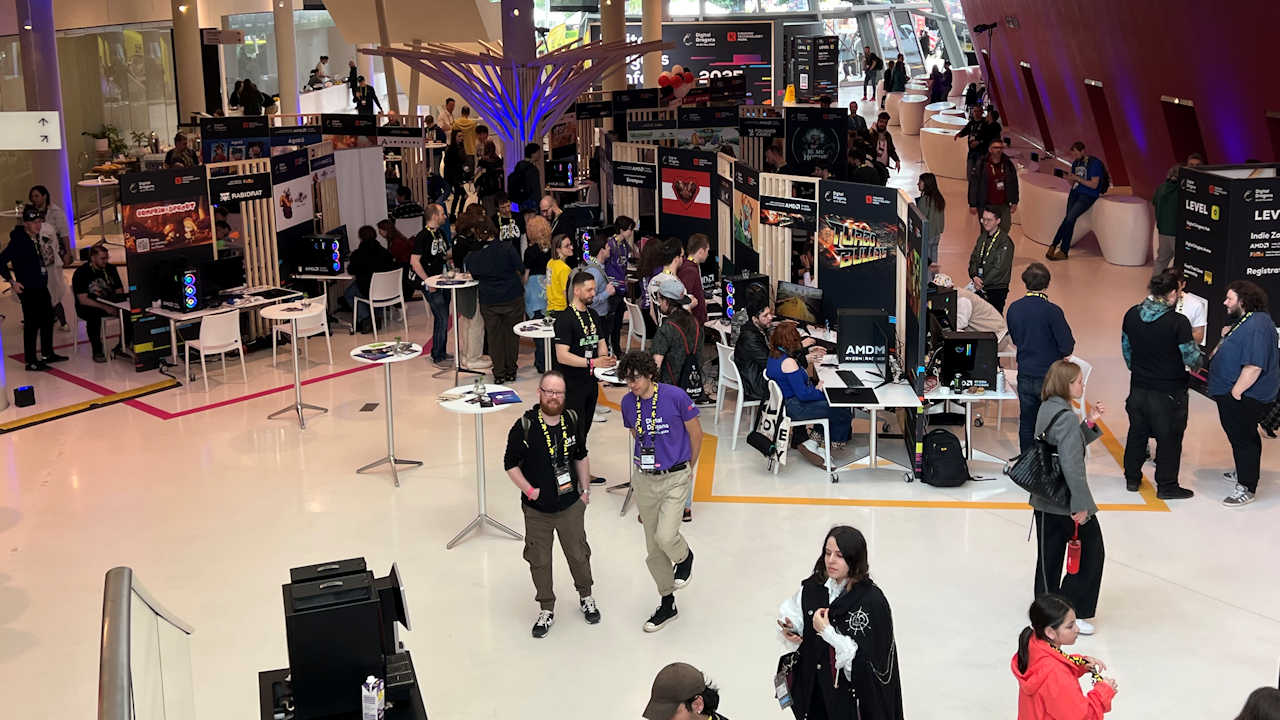
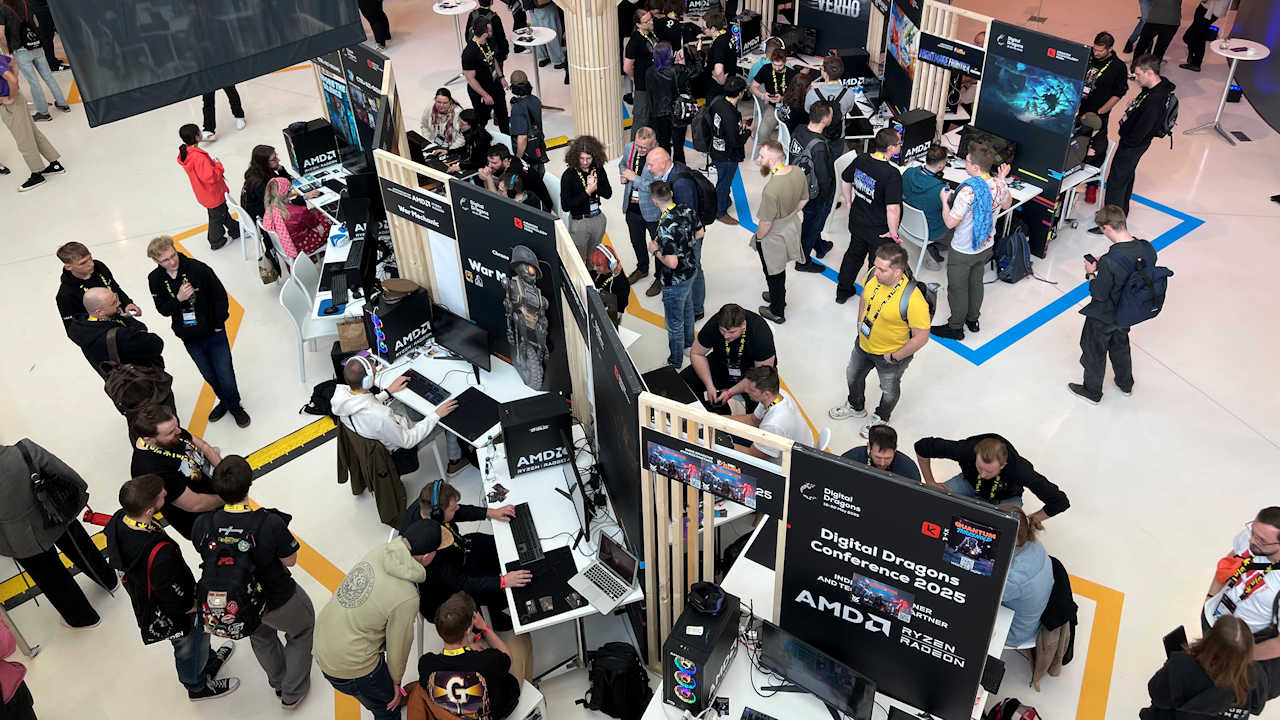
If you needed to find me at Digital Dragons when I wasn’t in a conference room, you’d have to look no farther than the Indie Zone. The Indie Zone was a warren of dozens of game stations each featuring a different indie game that occupied most of the center’s first floor. The developers of each of the games were there to give demos and talk about their games to whomever stopped by for a look. The Indie Zone was not restricted to Polish games, and a fair number of countries were represented. The games were in various stages of development from those near release with a demo available on Steam to others that had only a few playable levels on display. I’m always amazed at the creativity you see in the indie gaming space, and that’s really emphasized when you see so many of them side-by-side. It was interesting to see that a number of the games were auto-shooters, but just about every genre you could think of was represented. There were also some interesting concepts on display, such as a game that will adjust its difficulty to your skill level in real-time and one that featured a dystopian corporate state created entirely as a collage of cut-outs. In order to do the games in the Indie Zone justice, I’ll be previewing them in separate articles that will appear here as they are posted.
Games as a Cultural Export
Ever wonder why so many games come from Poland? I took a break from the conference center to head across the sidewalk to the industry meeting rooms to find out. Some of the game journalists covering the conference, myself included, were given the opportunity to attend a round-table in which some of the people behind the Polish games industry – developers, government officials, academics – offered a look at how seriously the country takes its games. The Polish game industry didn’t really register on the world market until a few studios were able to create the kind of breakout games that appeal to gamers everywhere. Those initial pioneering studios such as CD Projekt and Techland are now recognizable by name the world over, and they’ve helped to create what is now a major industry in the country. Developers left those companies to found new studios and others in Poland entered the industry inspired by the success of its pioneers, but these new Polish companies did not view each other as the competition. One of the strengths of the Polish game industry is its collaboration. Instead of creating an atmosphere of competition, the studios here share knowledge and provide support to each other. They also receive considerable support from the government. not only in the form of economic aid and promotion, but in developing a pipeline of new talent. Polish kids are taught programming skills in primary school, and by the time they reach high school they are able to develop games (one of the devs displaying their game at the Indie Zone was made up of high school students). Universities provide degree programs in all aspects of game development from programming to art to music, and they work closely with the game companies so that students have internship opportunities as well as a place to work once they graduate. The whole country is working together to make games Poland’s primary cultural export, and given all of the great Polish-made game we’re all playing, I think that they are succeeding quite nicely.
And the Egg Goes to …
At the end of the conference activities for the day, it was time for the Digital Dragons Awards Gala. This is an awards ceremony much like The Game Awards in which the top Polish games of the previous compete for awards in a number of categories. The winners get to take home a dragon egg shaped trophy. There’s a lot to this awards gala, so you can find coverage of it in a dedicated article here.

Fort Party the Krakow
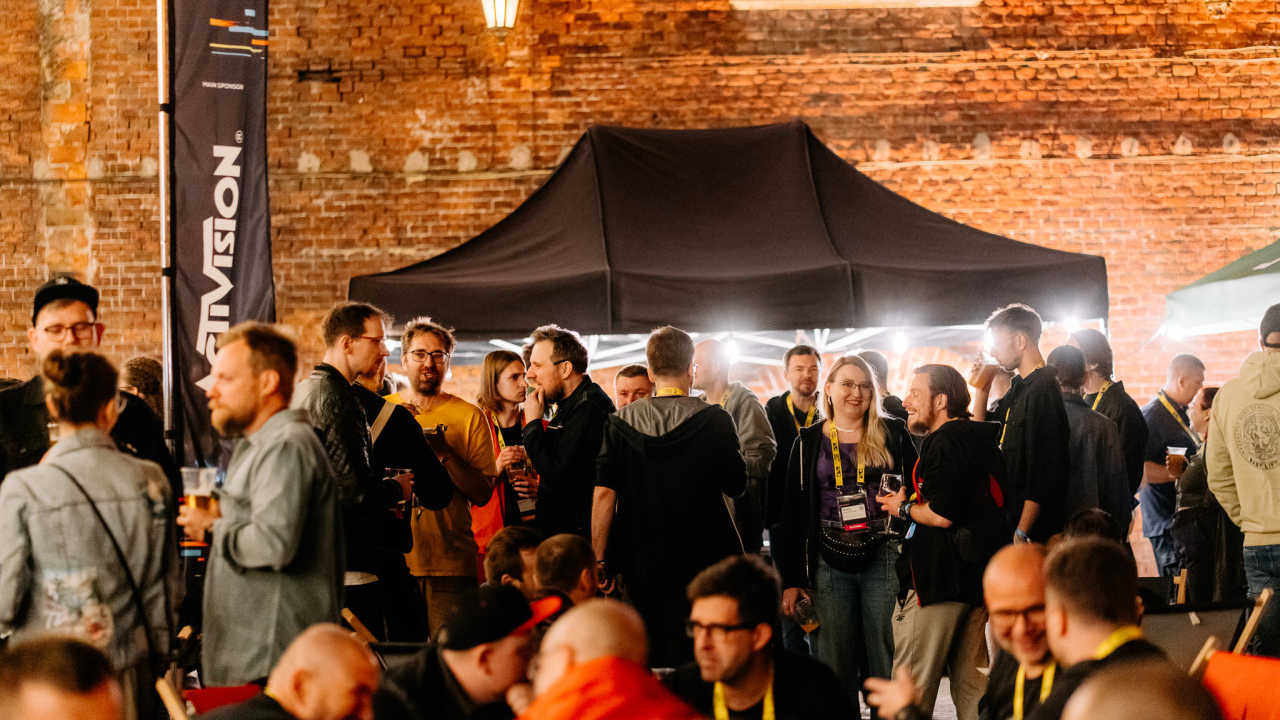
Once the final awards were handed out it was time for a party. The Digital Dragons Party took place at one of this ancient city’s newer buildings, Forty Kleparz, which was built in the 19th Century as a fort but now serves the more noble purpose of serving drinks and food. After a full day at the expo, attendees were able to relax with some delicious Polish BBQ and cold Polish brews. This was networking the way it should always be, low-key, relaxed, and fun. I had a great time getting to know the other game journalists covering the event, our awesome hosts, and game devs from around the world. While the party’s official end time was 3:00 AM, I left several hours before that so that I could hit the ICE Krakow Congress Centre bright and early the next day.